
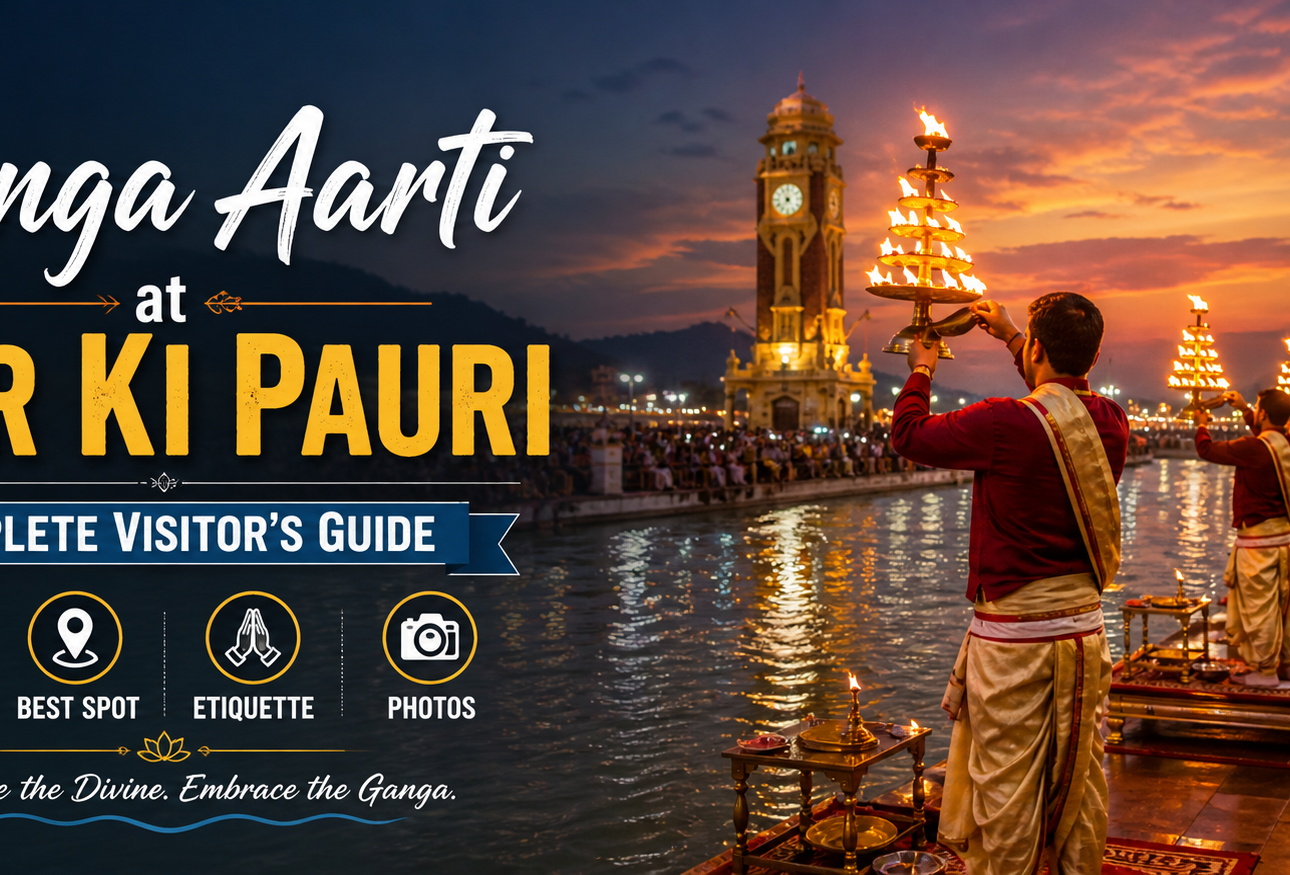
Ganga Aarti at Har Ki Pauri — Complete Visitor’s Guide (Timings, Best Spot, Etiquette, Photos)
If you visit only one ritual in all of North India, make it the evening Ganga Aarti at Har Ki Pauri in Haridwar. Bells, conch shells, hundreds of lamps lifted in unison, and the river carrying flickering diyas downstream — it is unforgettable, and a little bewildering the first time. This complete visitor’s guide will help you arrive at the right hour, find the right spot, follow the ceremony with understanding, and leave with calm in your heart.
1. What Ganga Aarti Is — and Why Har Ki Pauri
The Ganga Aarti is a sunset offering of light to the river goddess Ganga. Priests sing vedic hymns, ring brass bells, blow conch shells, and circle large multi-tiered oil lamps in clockwise patterns while pilgrims watch from the steps and float small leaf-cup diyas onto the water. The ritual is performed at several places along the river — Varanasi and Rishikesh are famous — but Haridwar’s Har Ki Pauri ghat is considered the spiritual epicenter.
The name “Har Ki Pauri” translates roughly to “footsteps of the Lord,” and the most sacred bathing area, Brahma Kund, is believed to be the spot where a drop of amrit (the nectar of immortality) fell during the cosmic churning. The Ganges itself emerges from the Himalayan plains and meets the country at this ghat, which makes the aarti here feel less like a performance and more like the river being personally welcomed home each evening.
For first-time visitors, our broader Haridwar Travel Guide 2026 sets the city in context. If the aarti is part of a larger pilgrimage, our Char Dham Yatra from Haridwar guide shows how this evening fits into a longer journey through the high temples.
2. Timings Through the Year (Summer vs Winter, Special Days)
The evening Ganga Aarti follows sunset, so the start time slides through the year. There is also a quieter morning aarti at sunrise that most travellers skip — though it is beautiful and almost crowd-free.
Approximate evening timings
- April – August (summer): 6:45 PM – 7:15 PM start, lasts about 30 minutes.
- September – October (post-monsoon): 6:15 PM – 6:45 PM.
- November – February (winter): 5:30 PM – 6:00 PM. The chill on the ghat is real — bring a shawl.
- March (early spring): 6:00 PM – 6:30 PM.
Morning aarti
Roughly 5:30 AM in summer and 6:30 AM in winter, performed with much smaller crowds. If your schedule allows, attend one of each — the morning is reflective, the evening is theatrical.
Special days when crowds swell
Mondays of Shravan (July–August) bring saffron-clad Kanwar pilgrims by the lakh. Other peak days are Ganga Dussehra, Kartik Purnima, Somvati Amavasya, Makar Sankranti, and the periodic Kumbh and Ardh Kumbh Melas. On these days arrive at the ghat at least 90 minutes early and expect traffic restrictions across central Haridwar. On a normal weekday, 45 minutes early is enough to find a comfortable seat.
3. Best Spots to Sit / Stand (Brahma Kund vs Opposite Bank vs Rooftop)
Where you sit changes the entire experience. Choose deliberately.
The main ghat at Brahma Kund
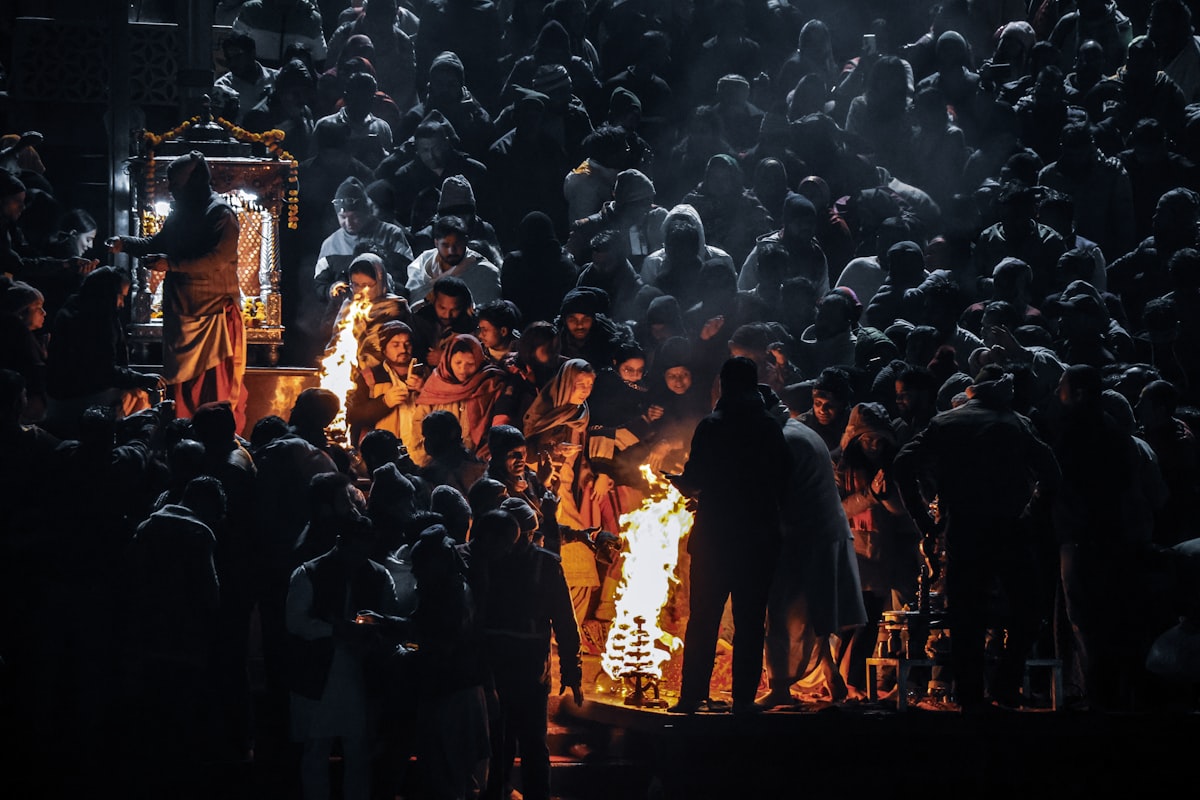
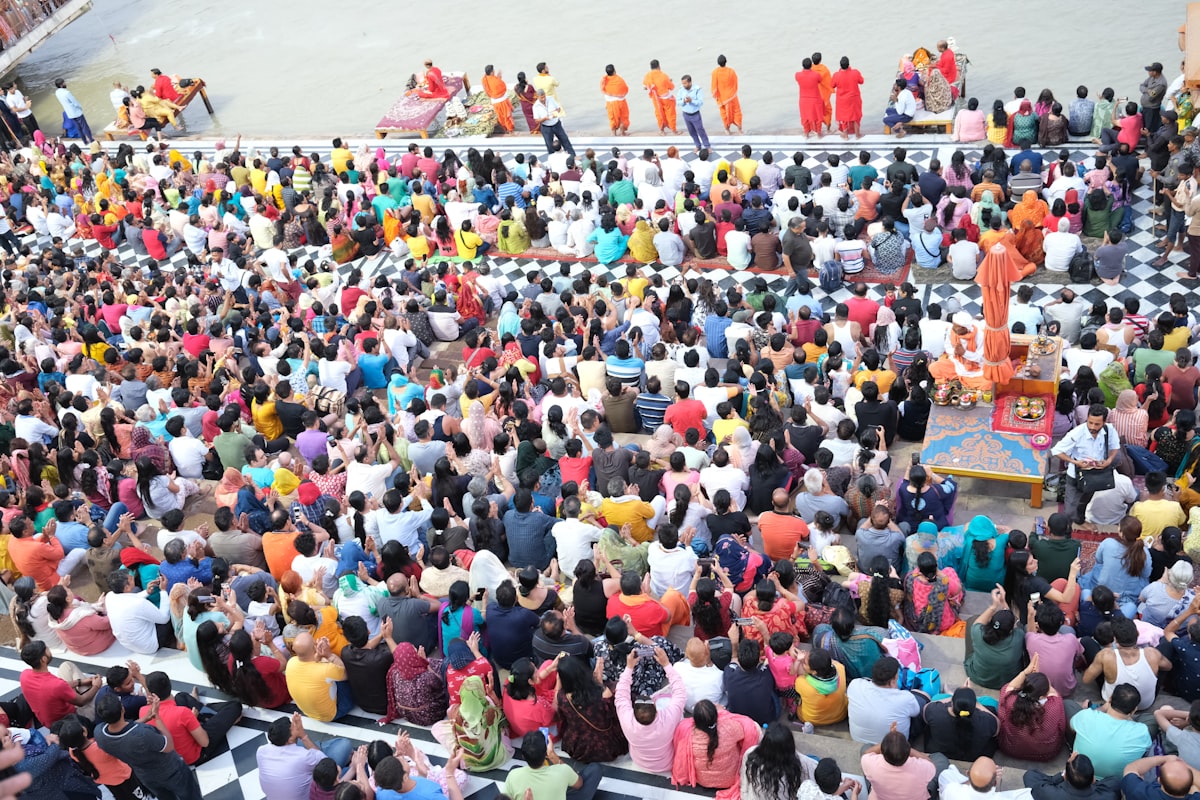
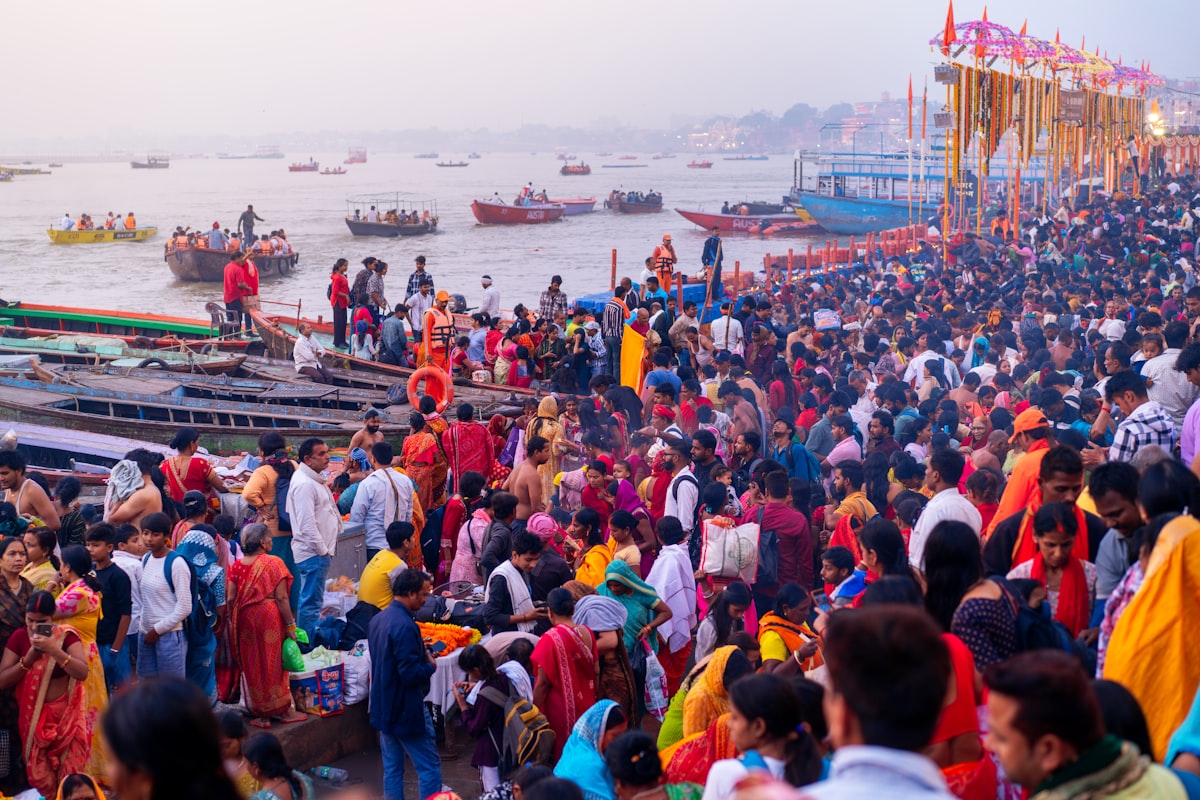
This is the side where the priests stand and the lamps are lifted, just upstream of the foot-bridge. It is the most intense, intimate, and crowded option. You will hear the bells in your chest and feel mist from the river. Arrive early, sit on the lower steps if you can, and accept that you will be shoulder-to-shoulder with strangers — that closeness is part of it.
The opposite bank (railing side)
Across the narrow channel, on the railing-lined embankment, you get the postcard view: the entire row of priests, the lamps reflecting in moving water, the crowd as a sea of folded hands. Photographers should choose this side. Arrive 60 minutes early for a front-rail spot.
The footbridge and the upstream steps
The pedestrian bridge is closed during aarti for safety, but the steps just upstream of it offer a slightly elevated angle. Less authentic-feeling than Brahma Kund, but easier on knees and excellent for travellers with children.
Nearby rooftops and balconies
A handful of guesthouses and small temples around Har Ki Pauri have rooftop terraces with a partial aarti view. They lack the closeness of the ghat but suit travellers who want the sound and sight without the crush.
4. What to Expect — Sequence of the Aarti
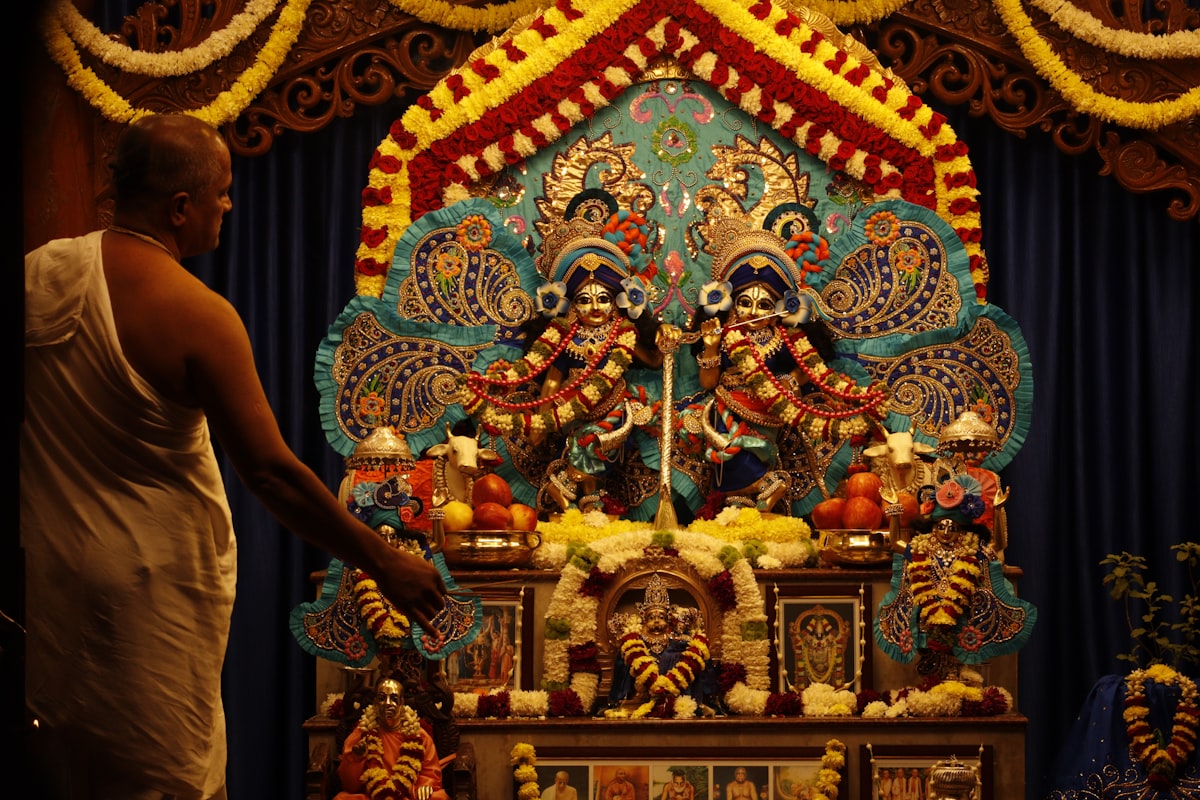
The ritual moves quickly once it begins. Knowing the rough sequence will help you stay present rather than fumbling for your phone.
- Pre-aarti chanting: 20–30 minutes before sunset, low Sanskrit recitation comes through the speakers and lamps are arranged.
- The conch and the bell: a single deep conch blast announces the start. Bells along the ghat ring in answer.
- Diya release: volunteers and vendors hand out small donas (leaf cups) holding marigold petals, a wick, and ghee. Light yours from a neighbour’s flame, make a silent wish, and set it carefully on the water.
- Lamp circumambulation: priests lift the multi-tiered brass lamps and trace clockwise circles in the air toward the river — once, then again, then a third time, in escalating tempo. This is the visual climax.
- Hymns to Ganga: the crowd sings “Om Jai Gange Mata” with the priests. You don’t need to know the words; humming along is welcome.
- Final blessing and prashad: water is sprinkled on the gathered devotees; small portions of prasad (sweetened semolina or sugar lumps) move down the rows.
The whole thing lasts about 30 minutes. The crowd thins quickly afterward, but the floating diyas drift downstream for the next half hour, and many travellers stay just to watch them go.
5. Etiquette, Photography Rules & Scams to Avoid
Etiquette
- Dress modestly: shoulders and knees covered. A light shawl works as both cover-up and head covering.
- Remove shoes before stepping onto the marble ghat steps. Shoe-stands at the entrances charge ₹10–20 per pair.
- Sit cross-legged rather than standing in front of seated devotees. Standing blocks the view and is considered impolite.
- No loud conversation during the chanting. Phones on silent, please.
- If you are not Hindu, you are completely welcome — simply be respectful. Joining hands during the hymns is appreciated, not required.
Photography
Photos and short videos are generally allowed, but flash is frowned upon and tripods are not permitted at Brahma Kund. Drones are banned in the entire Har Ki Pauri zone. Be discreet, and never put a lens between a worshipper and the priest.
Scams to avoid
- “Pandits” demanding ₹500–5000 for a quick blessing: a real tirtha purohit will offer the blessing first and accept whatever you choose to give. Anyone naming a fixed price up front is hustling tourists.
- “VIP seating” tickets: there is no official VIP seating at Har Ki Pauri. The ghat is free.
- Inflated diya prices: the leaf-cup diyas should cost ₹10–30. Some vendors quote ₹100+ to foreign visitors. Walk a few steps away and ask another vendor.
- “Helpers” offering to keep your shoes: use the official shoe-stands with numbered tokens, not random offers.
6. What to Do Before & After (Temples, Markets, Dinner)
Late afternoon — before the aarti
Climb the cable-car (Udan Khatola) up to Mansa Devi temple for a 30-minute darshan and a stunning view of Haridwar at dusk. Time it to be back at the ghat by 5:30–6:00 PM depending on season. Across the river, Chandi Devi is the matched temple; a combined cable-car ticket lets you do both early in the day.
Markets and a cup of chai
Bara Bazaar, the lane that funnels into Har Ki Pauri, is a riot of colour: brass puja items, rudraksha malas, Ayurvedic powders, and sweet shops piled high with peda and khoya-laced barfi. Stop at one of the old Mathura Walon Ki Dukan branches for kachori-aloo before the aarti, or sit in any rooftop café for masala chai.
After the aarti — dinner ideas
The lanes closest to the ghat are strictly vegetarian and alcohol-free, which is part of their charm. Chotiwala is a long-running thali institution; Hoshiyar Puri serves a beloved aloo-puri; Big Ben on the bypass road does South Indian dosa late into the evening. If you’d rather slip out of the crush, our private dining at Ganga Harmony stays open till 10:30 PM.
If you have one more day
Pair this evening with our Rishikesh day trip tomorrow morning, or use the aarti as the spiritual launch of the longer pilgrimage — Yamunotri, then Gangotri, and onward.
7. Where to Stay — Ganga Harmony, 10 Minutes From Har Ki Pauri
The single biggest decision after “when to come” is “where to stay.” On heavy aarti days, central Haridwar can take 40 minutes to cross by car. Stay too far out and you miss the morning ghat; stay too close and the noise of the bazaar lasts past midnight.
Ganga Harmony sits in that sweet middle distance — about 10 minutes’ drive (or 25 minutes’ walk) from Har Ki Pauri, far enough to sleep in calm river breeze and close enough to be at the ghat in time for the conch. We can arrange a pre-paid auto for the evening, hold a hot vegetarian thali for after you return, and brief you on the day’s exact aarti time at check-in.
Plan your Haridwar stay
Quiet rooms, river breezes, and ten minutes from the most beautiful aarti in India.
For a full picture of the city around your visit, see our deeper Haridwar Tourism Guide, the practical twin-cities guide to Haridwar & Rishikesh, or — if you are travelling in 2026 with the Char Dham in mind — our updated 2026 Char Dham guide and Badrinath Yatra (Part 4) piece. We’re also happy to take questions directly through our contact page.
“The aarti is not a thing you watch — it is a thing you allow to happen to you. Sit, breathe, let the bells take over. The river will do the rest.”
|| Har Har Gange ||